


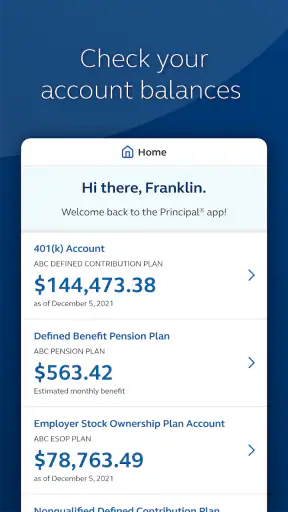
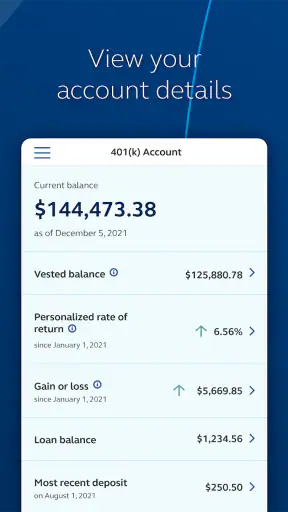
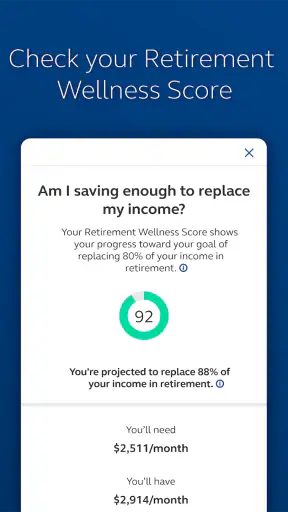
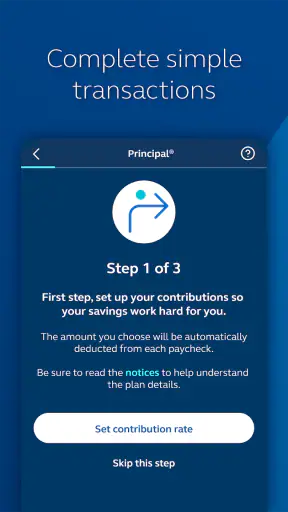
I approached Principal® as a mobile finance app for people who want to keep an eye on their financial goals without waiting until they are back at a computer. It is developed by Principal Financial Group, Inc., is free to download, and is rated for Everyone. After spending time with it, my impression is that its value depends less on flashy tools and more on whether your financial life already connects with Principal. When that connection is in place, the app can make routine checking feel much easier. When it is not, the experience can feel limited before you have even reached the useful part.
The app has been available since March 1, 2019, and its current version is 4.0.146. Its position in the finance category is clear: this is not the kind of app I would choose as a general-purpose budgeting notebook for every bank account, card, and cash purchase. I see it more as a mobile doorway into Principal-related financial information and goals. That distinction matters, because it explains both its strongest use cases and the moments when another type of finance app would suit you better.
Where people usually get stuck before the app becomes useful
The first point of friction is expectation. A person may install a finance app hoping to see a complete picture of household spending, then discover that the experience is centered on Principal rather than acting like an all-in-one money dashboard. I would decide what I want to monitor before signing in: a Principal account, a financial goal, or account-related information connected with the developer’s services. That simple decision prevents the common disappointment of expecting a full replacement for a bank app or a dedicated budgeting tool.
Another sticking point is access. Finance apps are naturally less forgiving when a sign-in detail is mistyped, an account is not yet connected, or a security step interrupts the process. I would avoid repeatedly guessing passwords or rushing through prompts. A careful first attempt, with the same information I use for my Principal relationship, is more sensible than treating the app like a casual social application where a temporary mistake has little consequence.
It is also easy to judge the app too quickly when the first screen does not immediately answer a question. Financial information may be organized around accounts and goals rather than the exact phrase I have in mind. Instead of opening and closing the app in frustration, I find it more useful to identify the task first: checking a balance, reviewing progress, confirming whether information has updated, or simply staying aware of a long-term objective. The clearer the task, the easier it is to tell whether the screen in front of me is actually missing something or merely presenting it in a different place.
The public response suggests that many people find the app worthwhile. It carries an average rating of 4.7 from around 44 thousand ratings, and it has more than a million installs. Those figures make it look dependable at a glance, but they should not replace a personal fit check. A high average can coexist with occasional sign-in trouble, device-specific problems, or frustration from someone who wanted features outside the app’s intended scope.
One practical insight is to separate three kinds of problems: access problems, display problems, and expectation problems. Access problems stop me from entering. Display problems let me enter but show information that appears incomplete or delayed. Expectation problems happen when the app works normally but does not provide the broad budgeting or account aggregation experience I imagined. Treating all three as “the app is broken” usually leads to wasted time.
What I would clarify before installing
I would first ask whether my financial relationship is with Principal. If the answer is no, the app may not be the right starting point, even though the download itself is free. A free finance app is not automatically useful for every financial situation. Someone who wants expense categorization across several unrelated institutions may get more value from a budgeting service designed around that job. Someone who already uses Principal and wants mobile access to relevant financial information has a much stronger reason to try it.
I would also consider who needs access. For an individual checking personal progress, the app’s focused nature can be an advantage. For a household that wants shared spending analysis, bill planning, and a combined view of accounts from different providers, the narrower focus may become a limitation. That is not a defect in itself; it is a reminder that financial apps solve different problems.
Setup checks that prevent avoidable trouble
My preferred setup is deliberately boring. I install the current release, confirm that I am using the official Principal experience, and make sure I have the correct account credentials ready before beginning. Since the app is free, there is no purchase decision blocking the setup, but finance access still deserves more care than a typical entertainment download. I would use a private connection I trust and avoid starting the process while moving between weak signals or public networks.
If the app opens but the sign-in process does not complete, I would check the basics in order: connection stability, accurate credentials, and whether the device itself is behaving normally. I would close other demanding apps, restart the device if it has been running for a long time, and try again without changing several things at once. This approach makes it easier to identify the real cause instead of creating a new problem through repeated attempts.
A useful setup habit is to read each prompt rather than tapping through automatically. Financial apps can ask for information or confirmation that feels routine, but the wording may explain why a screen is not advancing. If a prompt refers to an account detail I do not recognize, I would pause and verify it through a trusted Principal channel rather than improvising. That is especially important when a user is setting up access after a long period away from the service.
I would not assume that reinstalling is the first answer. Reinstallation can clear local issues, but it also adds another setup cycle and does not correct an incorrect credential or a service-side interruption. I would reserve it for a persistent local problem after simpler checks have failed. Before doing so, I would make sure I know the information needed to sign in again.
The same caution applies to updates. The current version is 4.0.146, so keeping the installed version current is sensible when an update is available. However, an update is not a universal cure. If the problem comes from a temporary connection issue or an account access issue, installing again may change nothing. I prefer to update as part of normal maintenance, not as a blind reaction to every unexpected screen.
One non-obvious trade-off is that a focused finance app can feel less forgiving than a general information app because the useful content depends on the relationship behind the login. If I am only browsing, there may be little to see. If I am properly connected, the same focus becomes a strength because I am not sorting through unrelated financial products or a crowded collection of budgeting tools.
How I would test the first successful session
After signing in, I would not immediately assume everything is working because the home screen loaded. I would check whether the information I expected is present, whether the account or goal labels make sense, and whether the displayed details appear current enough for the task I have in mind. I would then leave the app and return later, rather than spending a long session tapping every available area. This gives me a more realistic sense of whether access is repeatable.
I would also create a small personal routine around the app. For example, I might open it at the start of the week to review progress toward a goal and again before making a financial decision that depends on current information. The point is not to stare at balances constantly. It is to turn the app into a calm checkpoint instead of a source of unnecessary checking.
For anyone worried about age suitability, the Everyone rating makes the app broadly accessible from a content perspective, but that does not mean every financial decision is suitable for every user. Younger users may still need a parent, guardian, or qualified adult to help interpret financial information. The rating describes the app’s content audience, not the complexity of the choices a person may make after using it.
Recovering when a normal workflow breaks
When the app stops behaving as expected, I would begin by recording exactly where the problem occurs. “It does not work” is too broad to troubleshoot. A failed launch, a rejected sign-in, an empty account area, and information that looks outdated are different situations. Knowing the last successful step helps me choose a sensible next action and gives clearer information if I need support from Principal.
For a launch problem, I would close the app fully, reopen it, and restart the device if necessary. I would then check whether other apps can connect normally. If several apps are struggling, the phone or network is a more likely starting point than Principal. If only this app is affected, checking for the current version and trying again later is reasonable before taking more disruptive steps.
For a sign-in problem, I would slow down rather than making many attempts. I would verify the username or other access detail, check that the keyboard has not inserted an unwanted space, and use the appropriate account recovery route instead of guessing. If the same credentials work elsewhere but not in the app, I would note that distinction. It helps separate an account issue from a mobile-session issue.
For information that does not look updated, I would first check the time and context of the last successful activity rather than assuming the app has lost data. I would refresh only in a measured way, close and reopen the session, and compare the result later. I would not make an important financial decision based solely on a screen that appears inconsistent. When the consequence matters, I would confirm the information through an official Principal channel.
This is where I see one of the app’s most important practical limitations: mobile convenience can encourage overconfidence. A quick glance is useful for awareness, but it is not the same as a full financial review. I would use the app to notice questions and maintain a routine, then use the appropriate official process when a transaction, account change, or detailed decision requires greater certainty.
A second useful insight is to keep a short troubleshooting note. I would write down the device type, the stage where the issue occurred, whether other apps connected, and whether the problem repeated after restarting. That information is much more valuable than a vague complaint and can prevent me from repeating the same unsuccessful steps. I would avoid recording sensitive credentials in that note.
When waiting is smarter than changing everything
Not every interruption deserves a reset. If the phone is online, the app opens, and only one section behaves strangely, I would wait briefly and try again later before clearing local data or reinstalling. A temporary service interruption can look exactly like a local fault from the user’s side. Patience is especially sensible when the task is informational and not urgent.
On the other hand, I would not keep waiting if access is repeatedly denied, the information conflicts with what I know to be true, or the issue affects a time-sensitive financial decision. In those cases, I would move to an official support route and explain the exact sequence. The app is a convenient access point, not a reason to postpone getting a reliable answer.
When the app is not the cause
Many apparent app failures begin outside the app. A weak mobile connection, a congested home network, an outdated operating system, or an overloaded device can interfere with a finance session. I would test the connection with another trusted app, switch between reliable network options when appropriate, and restart the phone before blaming Principal. These checks are simple, but they eliminate a surprising number of false alarms.
Credentials are another common source of confusion. If I recently changed account information or use different details for separate financial services, it is easy to enter the wrong combination without realizing it. I would avoid copying credentials from an old note that may no longer be accurate, and I would use official recovery tools rather than third-party advice. A finance app should be treated as a sensitive access point, not as a place to experiment.
There is also a human cause: checking the wrong account or interpreting a goal screen as a transaction screen. I would read labels carefully and think about what the displayed figure represents before drawing conclusions. A number can be correct while still answering a different question from the one I intended to ask. This is one reason I prefer using the app as part of a broader financial routine rather than as my only source of understanding.
Compared with a conventional bank app, Principal feels more specialized. A bank app is usually the obvious choice for everyday transfers, card activity, and checking a deposit account. Compared with a broad budgeting app, Principal is less suited to pulling together spending from many unrelated sources and turning it into categories. Its advantage is focus: if my goals or accounts are connected to Principal, I do not need a general-purpose tool to perform the narrower task of checking that relationship on the go.
That comparison also clarifies who should skip it. I would not recommend making it the center of a complicated household budget if the household depends on multiple institutions, detailed expense categories, shared planning, or extensive reporting. I would also skip it if I have no meaningful Principal relationship to access. In those cases, a bank application or dedicated budgeting service would probably reduce friction rather than add another login.
Who is it best for? I think it suits an existing Principal customer who wants a convenient mobile checkpoint, a person tracking longer-term financial goals connected with Principal, and anyone who prefers a focused experience over a crowded financial dashboard. It is less compelling for someone looking for investment education, detailed cash-flow analysis, or a single screen combining every financial provider. Choosing it for the right reason matters more than its strong store reputation.
A realistic everyday example
Imagine I am commuting and remember that I wanted to review my progress before adjusting my monthly plans. I open the app, sign in, check the relevant Principal information, and close it once I have answered the immediate question. If the information looks unexpected, I do not make a rushed change from a train platform. I note what I saw, wait for a stable connection if needed, and confirm the detail through an official route before acting.
That scenario captures the app’s best role for me. It is useful as a quick, focused window into a Principal-based financial relationship. It is not a substitute for thoughtful planning, and it should not encourage impulsive decisions based on a single glance. The convenience is real, but the user still needs to supply the judgment.
My practical verdict after weighing the friction
Principal® is a sensible free finance app when your needs line up with Principal Financial Group, Inc. and you want mobile access to related financial goals or account information. Its 4.7 average and reach of over a million installs show that it has broad appeal, but my recommendation is still conditional rather than automatic. The app earns its place through relevance and convenience, not through being a universal money-management solution.
I like the focused purpose, the suitability for quick check-ins, and the fact that the experience can fit naturally into a weekly financial routine. I also appreciate that the app is available to an Everyone-rated audience, while recognizing that financial decisions themselves may require adult guidance or professional help. The main weakness is the same focus that creates its strength: people expecting complete budgeting, broad account aggregation, or everyday banking may feel they have installed the wrong tool.
My advice is to begin with a specific job. Install it if you already use Principal and want a mobile checkpoint. During setup, verify your connection and credentials, read prompts carefully, and test whether the information you need appears consistently. If something fails, identify whether the issue is access, display, or expectation before reinstalling or changing settings. Those steps make the experience calmer and help you avoid blaming the app for a network, account, or interpretation problem.
For me, the final decision is straightforward: I would recommend it to a Principal customer who values quick, focused access and understands its boundaries. I would choose a bank app for daily banking and a dedicated budgeting app for a broad household overview. Used in that role, Principal can be a practical companion for staying aware of financial goals on the go, without pretending to replace every other financial tool.


